Private jet etiquette: the rules behind the manners
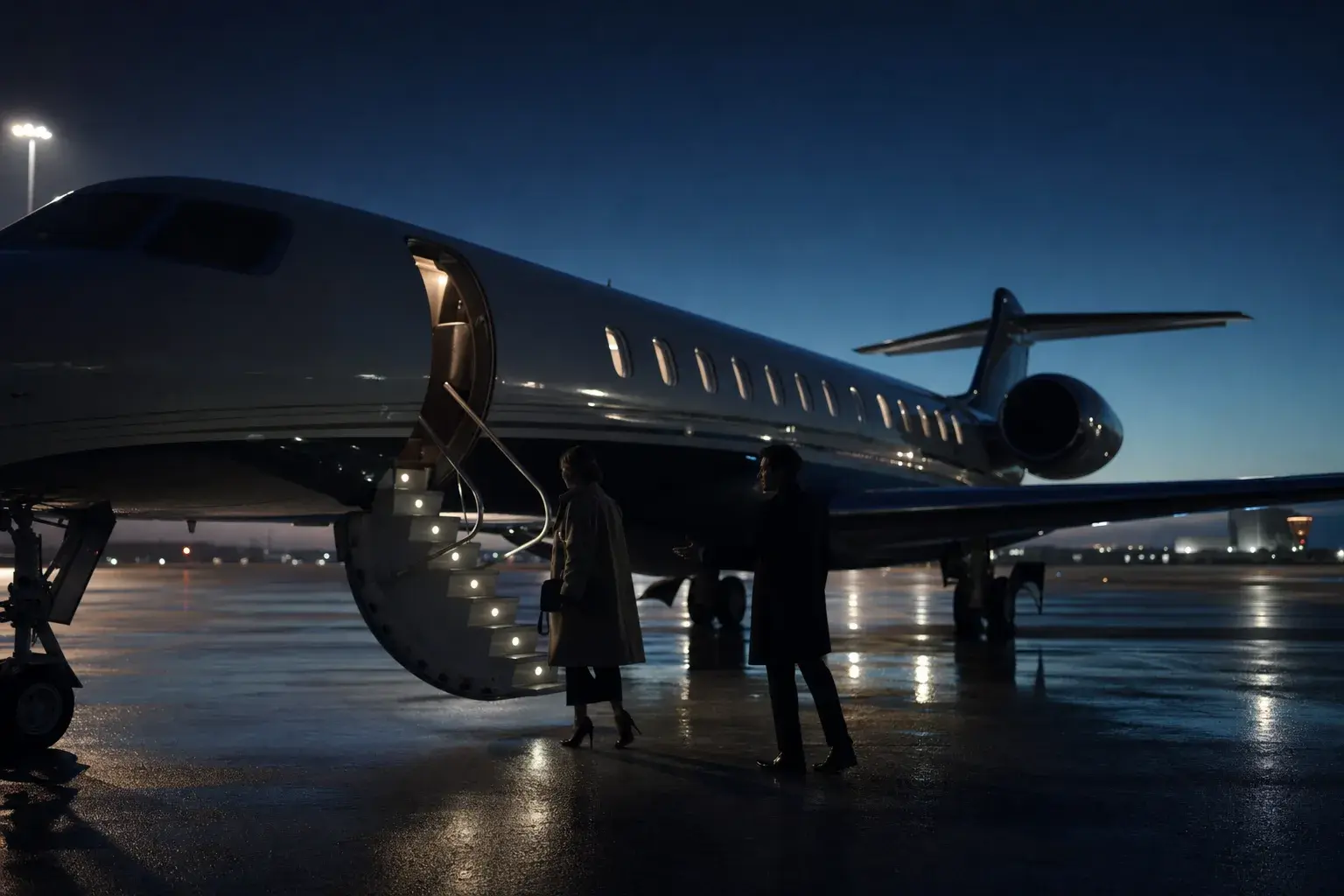
Most guides to private jet etiquette read like advice for a dinner party. Dress well and be kind to the crew. At JETAURA we arrange charter flights, and we think those guides leave out the part that decides how your flight actually goes.
We are a broker; the flight itself is carried out by the operator. That split matters here, because a good part of what looks like etiquette on board is in fact regulation, and the operator's crew applies it. The rules quoted in this article are US rules (Parts 135 and 91) and one EU rule.
Why private jet etiquette is mostly about who decides
On a scheduled flight, nobody wonders who is in charge. On a private jet, the cabin feels like yours. You chose the time, the route, sometimes the catering. It is easy to assume you also set the rules.
You don't. The operator holds the certificate and is responsible for operating the flight. Its crew follows the applicable aviation rules.
Some things really are just manners: how you dress, or whether you thank the crew. Other things only look like manners. Leaving your own bottle closed, or not boarding a friend who can barely stand. Those rest with the crew and the operator, and treating them as optional puts the crew in a position where it has to say no.
Before you ask a question on board, sort it: if it touches safety, alcohol or who boards, the answer comes from the operator.
The rules behind the manners
Three situations: drinking, briefings, and passengers who have had too much. Each has a rule behind it.
Start with alcohol. Under US rules for charter operators, 14 CFR § 135.121(a) states: "No person may drink any alcoholic beverage aboard an aircraft unless the certificate holder operating the aircraft has served that beverage." The same section bars the operator from serving anyone who appears intoxicated, and from letting such a person board.
Then the briefing. Under 14 CFR § 135.117(a), "Before each takeoff each pilot in command of an aircraft carrying passengers shall ensure that all passengers have been orally briefed on" a list of points. Among them: when, where and under what conditions smoking is prohibited, and "the use of safety belts".
And intoxicated passengers. For all civil aircraft in the US, 14 CFR § 91.17(b) says: "Except in an emergency, no pilot of a civil aircraft may allow a person who appears to be intoxicated … to be carried in that aircraft." In the EU, CAT.GEN.MPA.170(a), as worded in Regulation (EU) 2018/1042, requires the operator to "take all reasonable measures to ensure that no person enters or is in an aircraft when under the influence of psychoactive substances to the extent that the safety of the aircraft or its occupants is likely to be endangered."
| Situation | Courtesy | Rule (where it applies) | Who decides |
|---|---|---|---|
| Drinking on board | Drink moderately | US Part 135: only alcohol the operator has served (§ 135.121(a)) | The operator |
| Safety briefing | Put the phone down and listen | US Part 135: oral briefing before each takeoff (§ 135.117(a)) | The pilot in command |
| A passenger has had too much | Look after your group | US: not carried if apparently intoxicated, except in an emergency (§ 91.17(b)); EU: operator takes all reasonable measures (CAT.GEN.MPA.170) | The crew and operator |
Take the briefing seriously: on a US charter, the pilot in command has to make sure it happens.
A checklist for before and during the flight
Before the flight:
- Your wishes on catering, drinks, pets and luggage went into the enquiry
- You know who the operator is (see how to check the operator behind your charter)
- Your group knows the crew decides on boarding
On board:
- Everyone listens to the briefing
- If someone in your group isn't fit to fly, you raise it before boarding
How early to arrive at the airport depends on the airport, the terminal and the operator. Our FAQ covers that question.
What this means in practice for your enquiry
Much of private jet etiquette comes down to one habit: saying what you want before the flight is planned.
Say you are planning a flight for six people to a family celebration, and you want to bring a case of wine as a gift for the hosts. You mention it when you send your travel details. Whether it can be carried depends on the aircraft and the operator.
Catering wishes can be taken into account depending on the flight and the operator; for details, see our article on private jet catering. If a dog is travelling with you, read flying with a dog first.
What we do and what the operator does are different:
- We review suitable aircraft, prepare an individual offer and, after your confirmation, coordinate the next steps with the responsible operator.
- The operator carries out the flight, and its crew applies the rules on board.
Tell us your wishes at the start. We can only pass on what we know.
Can you drink alcohol on a private jet?
On a US charter flight under 14 CFR Part 135, you may drink alcohol only if the certificate holder operating the aircraft has served it. The same rule bars serving anyone who appears intoxicated. What is served on a specific flight depends on the aircraft and the operator, so ask before you fly.
Questions people also ask
Can you bring your own alcohol on a private jet?
On a US charter flight under Part 135, you may not drink alcohol on board unless the operator has served it (14 CFR § 135.121(a)). Whether a bottle can travel in your luggage, and whether the crew will serve it, depends on the aircraft and the operator. Ask before the flight.
Can a private jet crew refuse to fly a passenger?
Yes, in some situations. In the US, a pilot may not allow a person who appears to be intoxicated to be carried, except in an emergency (14 CFR § 91.17(b)), and a Part 135 operator may not let such a person board (§ 135.121(c)).
Is there a safety briefing on a private jet?
On US charter flights under Part 135, yes. Before each takeoff, the pilot in command must ensure all passengers have been orally briefed, including on the use of safety belts and when smoking is prohibited (14 CFR § 135.117(a)).
Can you smoke on a private jet?
On US Part 135 flights, the briefing must cover when, where and under what conditions smoking is prohibited (14 CFR § 135.117(a)). The answer for a specific flight comes from that briefing and from the operator's rules.
Planning a flight? Start with the details
About the author This article was written by the Aviation Team at JETAURA. JETAURA arranges private jet charter flights through a network of aviation partners and operators. We review suitable aircraft for each enquiry and put together matching options; the flight itself is carried out by the operator.
Sources (retrieved 15 September 2026)
- U.S. Government Publishing Office / FAA: 14 CFR § 135.121 and § 135.117, 2025 CFR edition
- U.S. Government Publishing Office / FAA: 14 CFR § 91.17, 2025 CFR edition
- EUR-Lex: Commission Implementing Regulation (EU) 2018/1042, CAT.GEN.MPA.170
This article explains regulations for general information. It is not legal advice. For binding answers, contact the relevant aviation authority or your operator.
- U.S. GPO / FAA — 14 CFR § 135.121 (2025 CFR edition), source-verifier GREEN 2026-09-15
- U.S. GPO / FAA — 14 CFR § 135.117 (2025 CFR edition), source-verifier GREEN 2026-09-15
- U.S. GPO / FAA — 14 CFR § 91.17 (2025 CFR edition), source-verifier YELLOW 2026-09-15 (Auslassung sichtbar halten)
- EUR-Lex — Regulation (EU) 2018/1042, CAT.GEN.MPA.170(a); source-verifier YELLOW, eurlex_unverified: Wortlaut nur über legislation.gov.uk (as adopted by the EU) bestätigt — vor Livegang manuell gegen EUR-Lex prüfen