Private jet cabin altitude: what the rules say and what they leave open
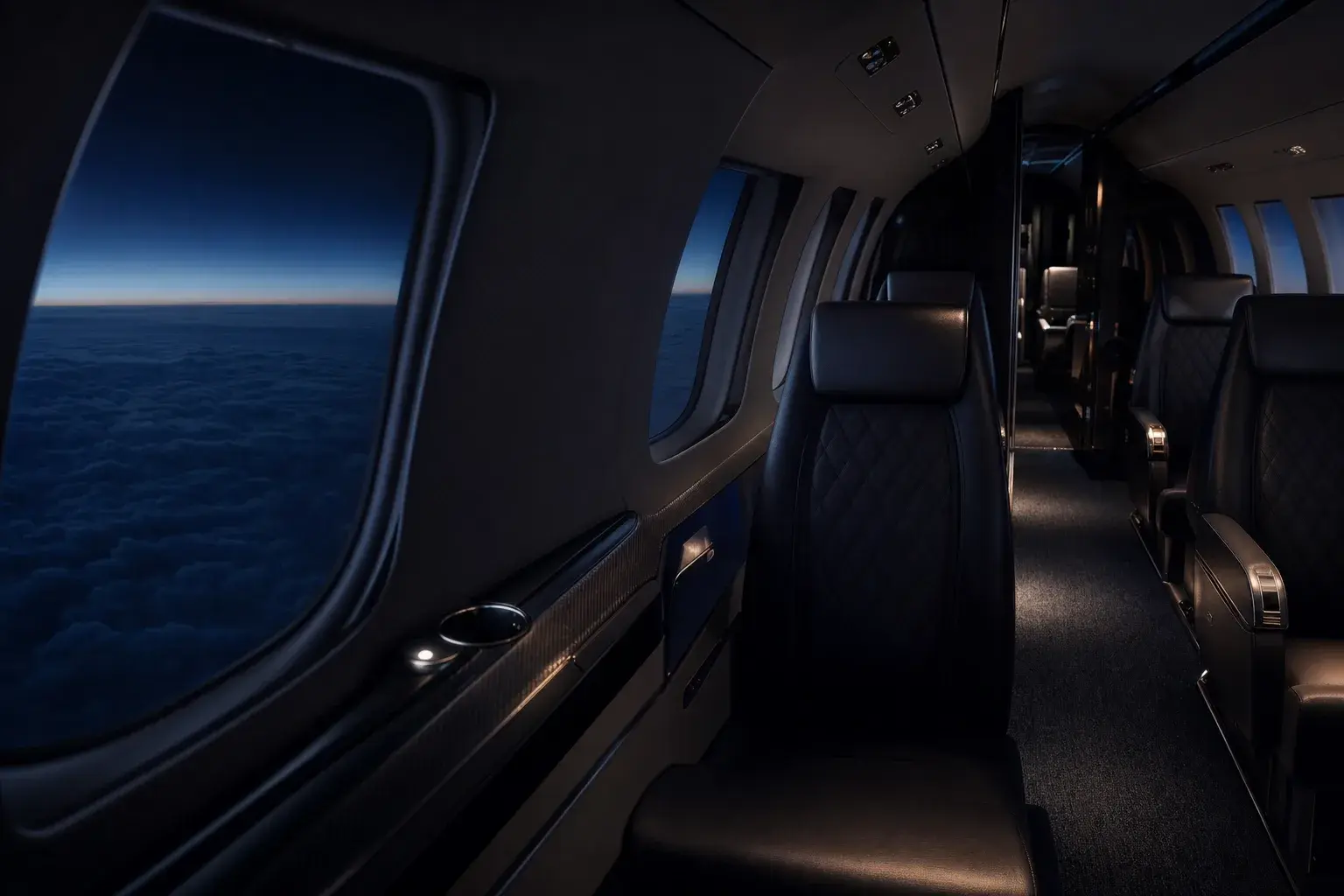
Private jet cabin altitude is a question of air pressure inside the cabin. JETAURA arranges private jet charter flights through a network of aviation partners and operators. The flight itself is carried out by the respective operator.
What is cabin altitude?
Cabin altitude, or cabin pressure altitude, expresses the air pressure inside an aircraft cabin as the altitude at which that pressure would occur outside. An aircraft can cruise higher than its cabin altitude because a pressurized cabin holds more pressure than the air around it. The figure on a given flight depends on the aircraft and its operation.
Why jets climb high in the first place is covered in why private jets fly higher. This article stays inside the cabin, starting with the ceiling the rules set.
What is the maximum private jet cabin altitude?
There is no single maximum private jet cabin altitude. For transport-category aircraft, US rule 14 CFR § 25.841 and EASA's CS 25.841 both require a cabin pressure altitude of no more than 8,000 feet under normal operating conditions. The US pressurization requirement for Part 23 airplanes, § 23.2320, sets no figure. What applies depends on how the aircraft is certified.
The wording is worth reading closely, because the two rules are not identical.
| Rule | What it says about cabin altitude | Applies to |
|---|---|---|
| 14 CFR § 25.841(a), FAA | No more than 8,000 feet "under normal operating conditions", except as provided in paragraph (c) | US transport-category airplanes |
| 14 CFR § 25.841(b)(6), FAA | Warning to the flight crew when cabin pressure altitude exceeds 10,000 feet, except as provided in paragraph (d) | US transport-category airplanes |
| EASA CS 25.841(a) | No more than 2,438 m (8,000 ft) "at the maximum operating altitude of the aeroplane under normal operating conditions" | Large aeroplanes certified to CS-25 |
| EASA CS 25.841(b)(6) | Warning to the flight crew when cabin pressure altitude exceeds 3,048 m (10,000 ft) | Large aeroplanes certified to CS-25 |
| 14 CFR § 23.2320(d), FAA | No figure. A pressurization system must protect against decompression to an unsafe level and against excessive differential pressure | US Part 23 airplanes with a pressurization system |
Paragraphs (c) and (d) of § 25.841 cover operations at airports at 8,000 feet elevation or higher. There, the rule allows a cabin altitude up to 2,000 feet above the airport and a higher warning threshold, under conditions it sets out.
The rules set limits for the aircraft. The next section turns to what the UK CAA says about the people inside.
What private jet cabin altitude means for your body
The UK Civil Aviation Authority addresses this in its guidance for health professionals. It refers to commercial aircraft, not specifically to private jets.
According to the UK CAA, the cabin altitude of commercial aircraft "should not exceed 8000 feet in normal operations, but in practice is typically between 5,000 and 7,500 feet." At the upper limit of 8,000 feet, the CAA puts cabin pressure at approximately 565 mm Hg. Arterial oxygen saturation falls to around 90 %, which the CAA describes as "well tolerated in healthy travellers."
The same page adds a limit. Passengers with conditions linked to hypoxia or reduced oxygen-carrying capacity, such as respiratory and cardiac conditions or severe anaemia, "may not tolerate the reduction in barometric pressure without additional support." If that applies to you, the right person to ask before flying is your doctor.
What we will not write is that a private jet cabin leaves you fresher on arrival. None of our sources says that about private jets.
What this means in practice for your charter request
You do not need to name a private jet cabin altitude to request a flight. The request starts with the trip: departure, destination, date and number of passengers. With those details, we check available aircraft, and you receive suitable options and an individual offer.
A hypothetical example: a family is planning a long flight with an older relative who has a heart condition. The cabin altitude matters to them. Their first step is the doctor. Their second is to mention the concern with the request, like any other wish on board. Whether and how it can be taken into account depends on the aircraft and the operator.
You do not have to find the right aircraft yourself. You will not receive a flat "from" price from us, but an offer tailored to your trip.
Checklist: before you send a request
- Departure airport or city
- Destination
- Travel date, and whether it is flexible
- Number of passengers
- Any medical concern about altitude, already discussed with a doctor
- Wishes on board, such as catering or Wi-Fi (both depend on the aircraft and operator)
For services on board and the booking process, see the JETAURA FAQ. For the wider comparison with scheduled flights, read how a private jet compares with first class.
Questions people also ask
What is the difference between flight altitude and cabin altitude?
Flight altitude is the height at which the aircraft flies. Cabin altitude, or cabin pressure altitude, expresses the air pressure inside the cabin as the altitude at which that pressure would occur outside. A pressurized cabin holds more pressure than the air around it, so the two figures differ. Both depend on the aircraft and its operation.
What happens if cabin altitude goes above 10,000 feet?
Under 14 CFR § 25.841 and EASA CS 25.841, the flight crew of a transport-category aircraft must be warned when the cabin pressure altitude exceeds 10,000 feet. The US rule allows a higher warning threshold for operations at airports at 8,000 feet elevation or higher, under conditions it sets out.
Is a lower cabin altitude always better?
The sources used here do not say so for private jets. According to the UK CAA, a cabin altitude of 8,000 feet lowers oxygen saturation to around 90 %, which is well tolerated in healthy travellers. Passengers with certain respiratory or cardiac conditions may need additional support and should ask their doctor.
Can I ask about private jet cabin altitude before booking?
Yes. You can mention cabin altitude or a related medical concern with your charter request. The flight is carried out by the respective operator, so whether and how the concern can be taken into account depends on the aircraft and the operator.
Planning a flight? The choice of aircraft starts with your trip.
Sources (retrieved 15 September 2026)
- eCFR: 14 CFR § 25.841 Pressurized cabins
- EASA: Easy Access Rules for Large Aeroplanes (CS-25), CS 25.841
- eCFR: 14 CFR § 23.2320 Occupant physical environment
- UK Civil Aviation Authority: Physiology of flight
About JETAURA Written by the JETAURA aviation team. JETAURA arranges private jet charter flights through a network of aviation partners and operators. We check suitable aircraft for each request and put together options. The flight itself is carried out by the respective operator.